Theory of Structural Resource Deprivation: A Global Framework for Understanding Deprivation, Identity Breakdown, and Deviant Adaptation
- Benjamin Okonofua

- Nov 28, 2025
- 1 min read
Overview
Across the world, societies marked by inequality, elite capture, and uneven development exhibit recurring patterns of deviance, instability, and social fragmentation. From insurgencies in resource-rich but impoverished regions to organized crime in deindustrialized urban centers, from separatist movements in marginalized territories to radicalization among disenfranchised youth, the global landscape shows strikingly consistent dynamics. These are not isolated crises. They are symptoms of deeper structural conditions that shape identity, opportunity, and social cohesion.
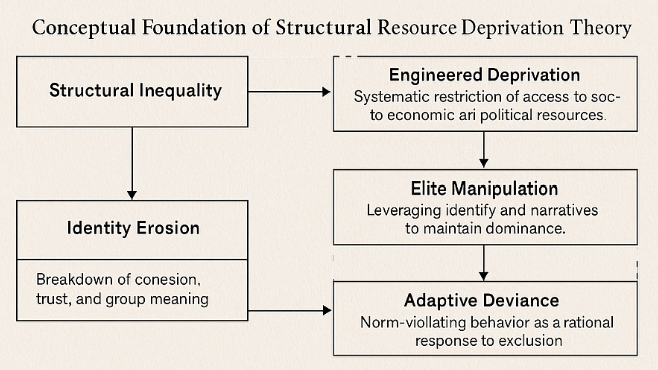
Structural Resource Deprivation (SRD) Theory, propounded by the Nigerian criminologist Benjamin Aigbe Okonofua, offers a comprehensive framework for understanding these global patterns. At its core, SRD Theory argues that deviance is a predictable response to structural conditions in which entire communities, whether ethnic minorities, displaced groups, or economically oppressed majorities, are systematically denied access to the material, political, and symbolic resources necessary for a dignified existence. Under such conditions, group identity erodes, social trust collapses, and deviant strategies emerge as alternative pathways to survival, agency, or resistance.
Although SRD Theory originated in the postcolonial African context, its logic transcends geography. Around the world, elite appropriation of resources, institutional exclusion, discrimination, and political manipulation generate similar trajectories of alienation and adaptive deviance. This chapter presents SRD Theory as a global theory of deviance, situating it within broader criminological traditions and demonstrating its applicability across diverse societies.
Click below to read more
Comments